


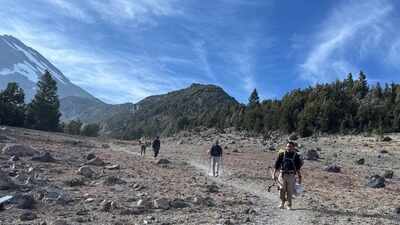
Three novice hikers from Roseville, California, were rescued from Mount Shasta after an attempted summit climb that they had planned with substantial help from Google’s Gemini AI turned into a dangerous overnight ordeal. The three men expected their ascent to take about eight hours and carried food and water based partly on that plan. Instead, they reached the 14,179-foot summit at about 7 p.m. on Sunday, August 30, well beyond the recommended noon turnaround time. Their descent took place in darkness, and they eventually wandered off route into the Mud Creek Canyon drainage. One hiker injured his knee after a fall, their phone used for navigation lost power and the group spent the night without adequate food, water, warm clothing or emergency shelter before Forest Service climbing rangers reached them the next morning.
California hikers began climb with an AI-assisted plan
The three men left the Clear Creek Trailhead on Mount Shasta’s southeastern side on Saturday, August 29, and established a base camp at about 8,400 feet. According to the U.S. Forest Service and Siskiyou County Sheriff’s Office accounts, the group were novice climbers and had used several digital sources while preparing for the trip, including Google’s Gemini, YouTube and the AllTrails mapping application. Gemini was used for information about the route as well as decisions about what food and how much water to carry. The group planned around an approximately eight-hour climb and set off from their camp at about 3 a.m. on Sunday carrying daypacks. Authorities later said Gemini had advised them to take considerably less food and water than they ultimately needed.
They reached the summit seven hours after the turnaround time
The climb took considerably longer than expected. The hikers did not reach the summit until approximately 7 p.m., even though climbers on Mount Shasta are advised to turn around by noon if they have not reached the summit. The rule is designed to leave sufficient daylight for the descent and reduce the risk of people becoming stranded. By reaching the summit roughly seven hours after that recommended turnaround point, the group began its return in darkness. The Forest Service said the climbers had been advised to turn around during the ascent, but they continued and eventually reached the summit. Their roughly eight-hour plan had effectively become a much longer undertaking before they even began the descent.
Darkness, dead batteries and a wrong turn left them stranded
About an hour after leaving the summit, the hikers contacted the Siskiyou County Sheriff’s Office dispatch for directions, but they eventually wandered off the established route and into the Mud Creek Canyon drainage. They had been using AllTrails for navigation, but the phone running the application ran out of battery and a backup charger failed. The Forest Service said one member also had a Garmin watch, although the group primarily relied on visual navigation during the descent. At around 11,500 feet, one of the hikers fell and injured his knee. The group eventually stopped at about midnight in the steep drainage and spent the night there. They lacked enough food and water for an unexpected overnight stay and did not have adequate warm layers or emergency shelter.
Rangers found them the next morning
U.S. Forest Service climbing rangers reached the stranded hikers at about 9:30 a.m. on Monday, August 31. The rangers provided first aid to the injured climber as well as food and water for the group. Siskiyou County Search and Rescue volunteers were deployed to assist with the operation. Helicopter assistance was complicated by conditions at the higher elevations, with the Forest Service reporting difficulties with attempted helicopter hoists. The hikers therefore continued down the mountain with the climbing rangers. They eventually reached their base camp at about 3 p.m., where county search-and-rescue personnel helped escort them back towards the Clear Creek Trailhead. The hikers and rescuers returned without further incident.
Authorities warn against relying on AI in the backcountry
After the rescue, the hikers acknowledged that they had put too much faith in the technology. According to the Forest Service account, they said, “We relied too much on AI rather than our own critical thinking.” The Siskiyou County Sheriff’s Office described the use of Gemini as a “critical misstep”, saying the hikers had been advised to bring far less food and water than their group required. Officials stressed, however, that the rescue resulted from a combination of problems rather than a single AI-generated error. The group continued beyond the recommended turnaround time, descended after dark, lost its primary navigation method, went off route and had insufficient supplies for an unexpected night on the mountain. Authorities now advise climbers to contact the Mount Shasta Ranger Station before a trip, use established local information, carry multiple navigation methods including a paper map, regularly verify their position and prepare for an unplanned overnight stay. The sheriff’s office specifically advises climbers who have not reached the summit by noon to turn around.